UNAIDS Asia-Pacific
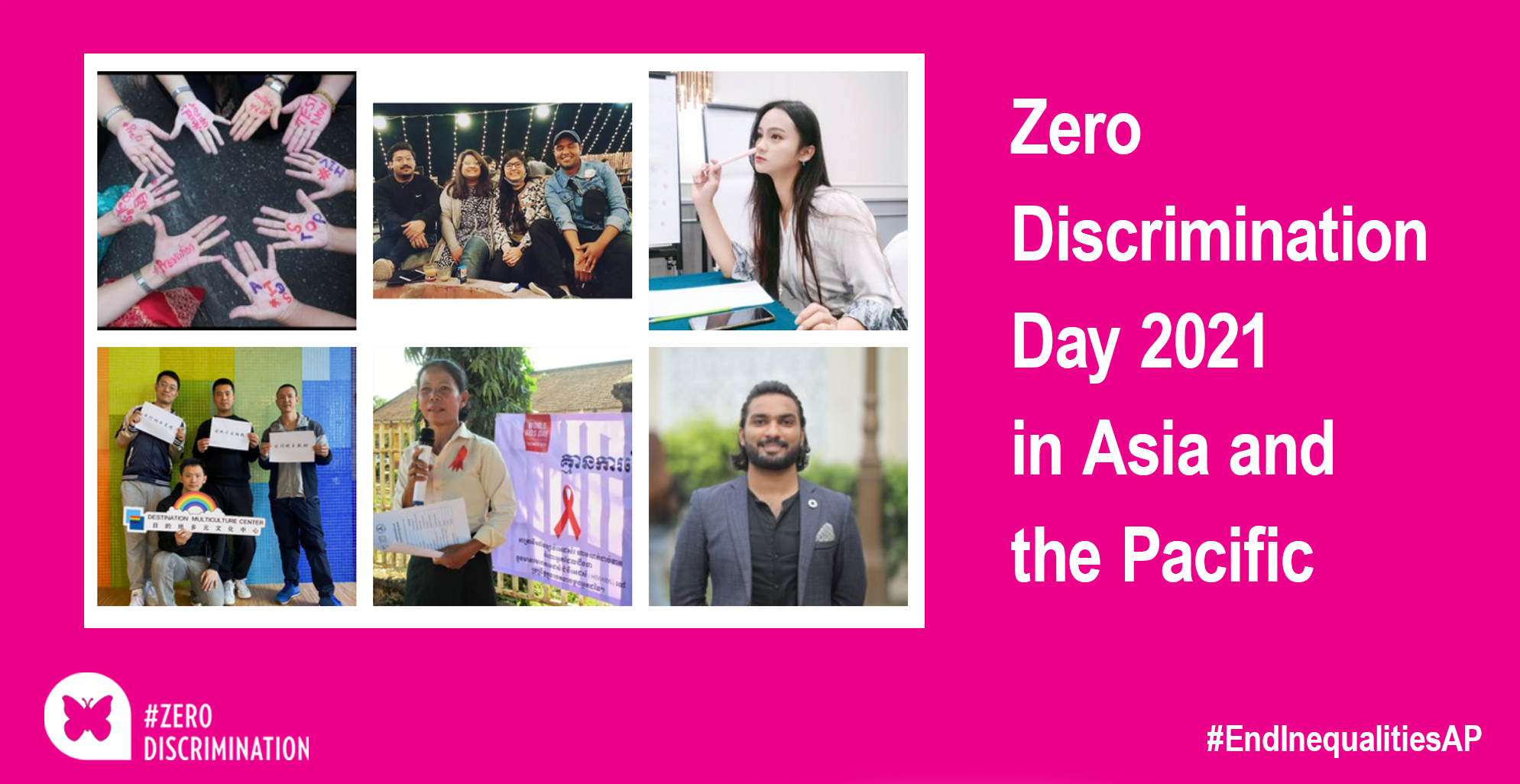
Bangkok, Thailand, 5th of March, 2021 – To mark Zero Discrimination Day, UNAIDS AP launched a regional social media campaign that showcases the voices of people, communities and networks around the impact of inequalities and stigma and discrimination in Asia and the Pacific.
On Zero Discrimination Day this year, UNAIDS highlighted the urgent need to take action to end the inequalities surrounding income, sex, age, health status, occupation, disability, sexual orientation, drug use, gender identity, race, class, ethnicity and religion that continue to persist around the world. Inequality is growing for more than 70% of the global population, exacerbating the risk of division and hampering economic and social development. And COVID-19 is hitting the most vulnerable people the hardest—even as new vaccines against COVID-19 are becoming available, there is great inequality in accessing them.
Read More
Bangkok, Thailand, 1st of March, 2021– To mark Zero Discrimination Day, APCOM launches a short report that compiles stories and articles published in the Covid-19 Effect Series, a newsletter created by APCOM to profiles issues, challenges and solutions from the LGBTQI communities and key populations across Asia and the Pacific. Since April 2020, with more than 19 issues, the series has provided a platform to leverage the voices of people living with HIV and LGBTQI to share stories, highlight challenges, showcase innovation and build strength within these communities.
Read More
The transgender community has been severely affected by the COVID-19 pandemic in Asia and the Pacific. “My main worry is about survival and being able to support and cover the essential needs of the transgender community when job security is less and businesses are closing,” said Khartini Slamah, a transgender woman and activist from Sarawak, Malaysia, who is also known as Mama Tini in her community. “Many transgender people are unable to pay rent and utility bills, unable to do sex work, conduct their usual businesses. Some even lost their jobs,” she said.
Read More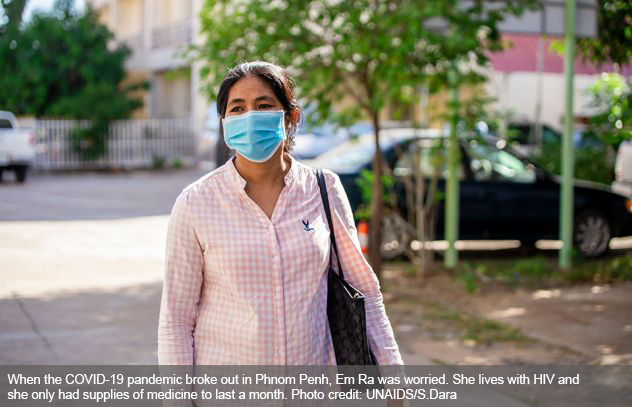
When the COVID-19 pandemic broke out in Phnom Penh, Em Ra, pictured above, was worried.
She lives with HIV and she only had supplies of medicine to last a month.
“First, I was afraid that the medicine could not be shipped to Cambodia, the second is that when we don’t have medicine for a few months we have to come to the clinic often,” she said. “This increases my expenses but also raises my chances of getting COVID-19.”
Read More
Ralph Ivan Samson, the President of Y-PEER Pilipinas, and his team of young volunteers have been working tirelessly throughout the COVID-19 pandemic to supply antiretroviral therapy to young people struggling to get refills. “How could I sleep at night knowing that community members were depressed and anxious about their refills. I had young people texting me they were down to their last couple of pills,” said Mr Samson, remembering the initial COVID-19 outbreak in the Philippines in March 2020. It was at this moment that he knew he had to do something.
Read More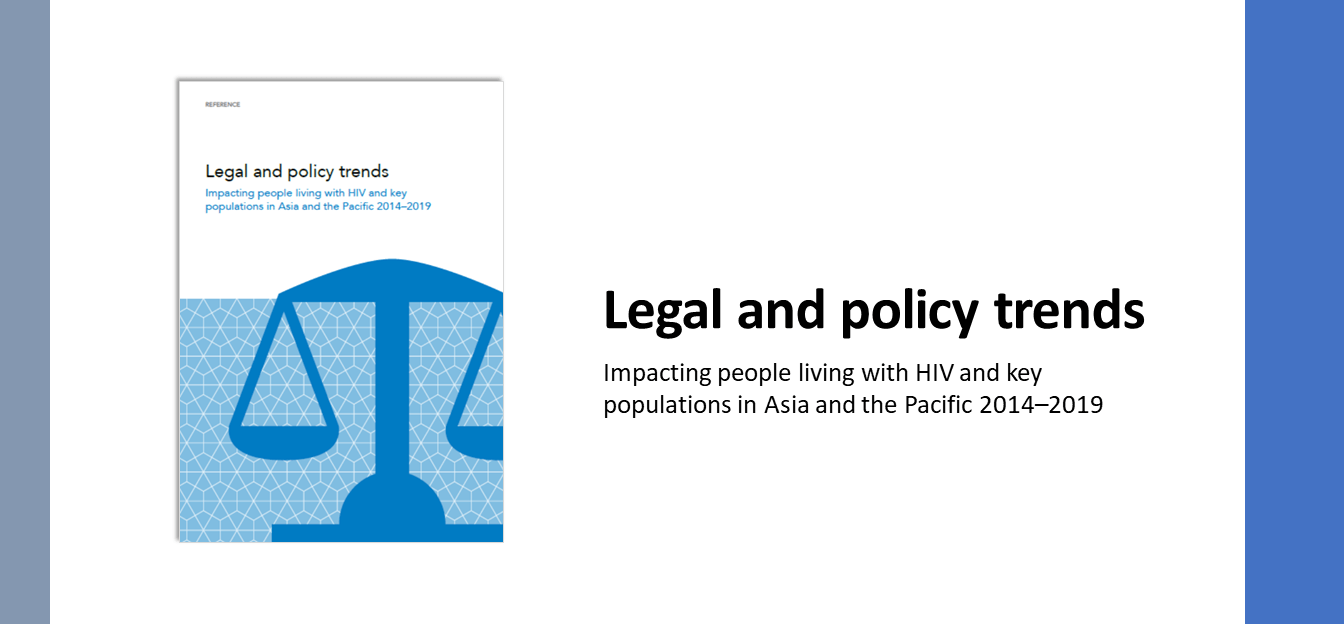
New report provides update on trends in the region and outlines the problematic laws and policies that continue to impact people living with HIV and key populations1
Bangkok, 14 January 2021 – Reforming laws and policies to ensure they are grounded in evidence and human rights is essential for an effective HIV response in Asia and the Pacific, says a new joint report by UNAIDS and the United Nations Development Programme (UNDP).
In 2015, 193 United Nations Member States agreed on the 2030 Agenda for Sustainable Development. This included a goal of ending the AIDS epidemic by 2030 and leaving no one behind through a multisectoral, rights-based, people-centred approach that addresses the determinants of health. Yet, legal and policy obstacles continue to undermine an effective HIV response in the region – particularly among vulnerable populations – limiting access to prevention, testing, treatment and care services.
Read More
Warm smiles greet Lily as she approaches her first stop of the day—one of the 11 brothels scattered across the country that Lily, the President of the Bangladesh Sex Worker Network, visits quarterly to check in with the women and see what assistance they need. Though her visits have been limited in recent months due to movement restrictions to curb the spread of COVID-19, Lily knows well enough that those smiles are a brave front for the troubling times that her peers have experienced.
Read More

Warm smiles greet Lily as she approaches her first stop for the day. It is one of the 11 brothels scattered across the country that Lily, the President of the Bangladesh Sex Worker Network, visits quarterly to check in with the women and see what assistance they require. Though her visits have been limited in recent months due to movement restrictions to curb the spread of COVID-19, Lily knows well enough that those smiles are a brave front for the troubling times that her peers have confronted.
Read More