 UNAIDS Asia-Pacific
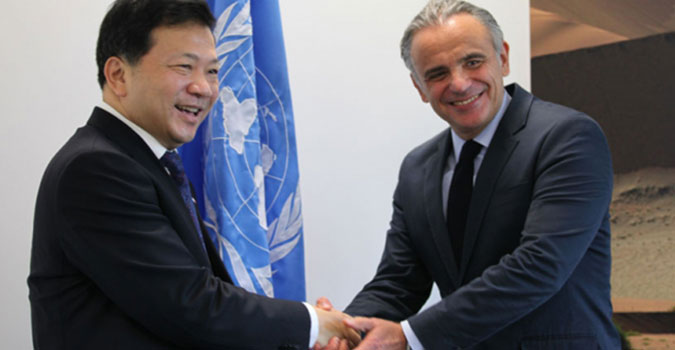
The Vice-President of Xinhua News, Shen Haixiong, reaffirmed the news agency’s commitment to continue raising public awareness of the AIDS response in China and beyond during a meeting with UNAIDS Deputy Executive Director Luiz Loures on 19 November. Read More

When Sopheap comes back from work at 2 a.m., she tiptoes around her one-room flat, because everyone is sleeping. The 35-year-old mother slides into the bed she shares with her two young sons and catches a few hours of sleep, before getting up to make breakfast. Read More

Singapore’s Court of Appeal recently upheld the law criminalizing sex between men, a ruling the lesbian, gay, bisexual, transgender and intersex (LGBTI) community in Asia sees as part of a growing conservative trend in the region. For example, in 2013 the Supreme Court of India overturned the 2009 decision of the Delhi High Court to strike down a 150-year-old law criminalizing same-sex sexual conduct. In Singapore, men who commit acts of “gross indecency” with other men can face up to two years in jail. Read More

Opinion-Piece by Michel Sidibé, UNAIDS Executive Director. Bangkok Post, 27 Oct 2014.
Thailand has set the global standard for how a country can effectively respond to AIDS and as a key member of the Association of Southeast Asian Nations (Asean) has initiated policies, which have changed the region’s approach to HIV. From the very first time I visited, I was impressed by the country’s dynamic response to the AIDS epidemic. In the early 1990s, when many countries were still in denial, Thailand made HIV prevention a priority. The leadership, backed by a grass-roots movement, sparked a large-scale HIV information campaign, popularized the use of condoms and showed the world what can be achieved when political commitment meets bold action. New HIV infections have fallen dramatically, from more than 140 000 in 1990 to 8200 in 2013. As the epidemic evolves, Thailand continues to break new frontiers.
Read the entire opinion piece on the Bangkok Post website.
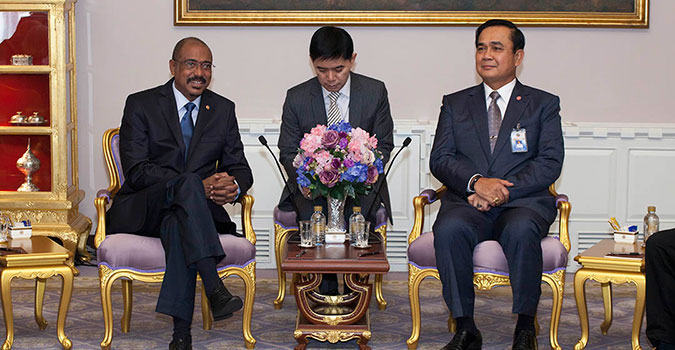
Thailand remains committed to working with other partners to end the AIDS epidemic in the region. Speaking to UNAIDS Executive Director Michel Sidibé on 27 October in Bangkok, Thailand, Prime Minister Prayut Chan-o-cha emphasized that Thailand will maintain its efforts in the HIV response and will share its experience with neighbouring countries and the world. He also stressed that Thailand’s commitment to the three zeroes—zero new HIV-infections, zero discrimination and zero AIDS-related deaths—is absolutely unwavering. Read More
 Civil society groups, Bangkok Metropolitan Administration and UNAIDS launch mobile application.
Civil society, public and private organizations and UNAIDS are leveraging advances in mobile technology to empower communities. This innovative partnership grew out of working together to tailor the mobile application – iMonitor+ – to the needs of community organizations. The app for smart telephones and other digital media aims to enable groups to monitor access to HIV prevention and treatment and provide feedback on the quality of those services. Read More

A “one-stop-shop” health centre in Hanoi is providing integrated HIV and other healthcare services that are achieving progress and maximizing investments in the AIDS response in Viet Nam. Hanoi’s South Tu Liem district health centre is a model that the Viet Nam Authority for HIV/AIDS Control plans to replicate in high-burden areas of the country. Read More

The Government of Viet Nam announced on 25 October its commitment to new targets intended to rapidly expand HIV treatment, thus becoming the first country in Asia to adopt the 90–90–90 targets. Read More



 UNAIDS Asia-Pacific