UNAIDS Asia-Pacific
Funding cuts put uneven HIV progress in Asia and the Pacific at risk, UNAIDS warns
One quarter of people still lacking HIV treatment globally live in the region, while rising epidemics and financial pressure on prevention programmes threaten further progress
RIO DE JANEIRO/BANGKOK, 27 July 2026—One quarter of all people globally who were still not receiving HIV treatment in 2025 lived in Asia and the Pacific, while an estimated 280,000 people acquired HIV in the region, according to new UNAIDS data released today.
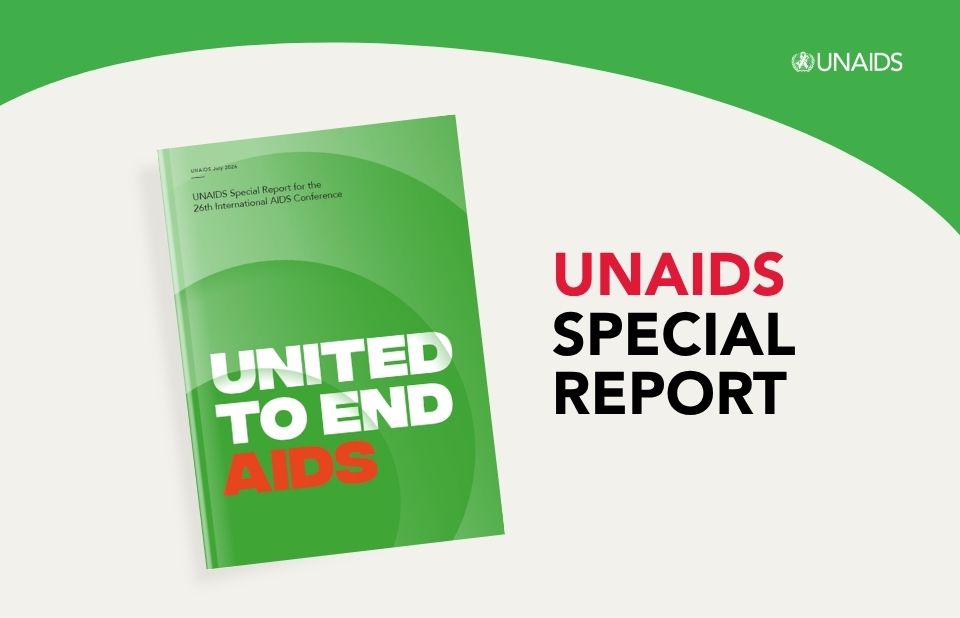
The findings are contained in United to end AIDS, a special UNAIDS report launched at the opening of the 26th International AIDS Conference in Rio de Janeiro, Brazil. The report warns that reductions in international financing and cuts to HIV prevention and community-led services could lead to a resurgence of the epidemic.
Globally, new HIV infections and AIDS-related deaths are at their lowest levels in more than 30 years. However, 1.2 million people acquired HIV and 570,000 people died of AIDS-related illnesses in 2025. New HIV infections rose in three regions and 21 countries.
Asia and the Pacific has made significant progress, but the regional picture remains deeply uneven. Between 2010 and 2025, new HIV infections declined by 21%. Even so, an estimated 280,000 people acquired HIV in the region in 2025, and epidemics continued to grow in several countries, including Fiji, Pakistan and the Philippines.
Key populations and their sexual partners accounted for the large majority of new HIV infections in the region. Yet gay men and other men who have sex with men, transgender people, sex workers, people who inject drugs, and people in prisons and other closed settings continue to face some of the greatest barriers to accessing appropriate HIV prevention, testing and treatment services.
Testing and treatment gaps also remain substantial. Of the nearly 9 million people living with HIV globally who were not receiving treatment in 2025, around one quarter lived in Asia and the Pacific. Greater efforts are needed to expand differentiated, voluntary and confidential HIV testing and ensure that everyone diagnosed with HIV can access treatment and achieve viral suppression.
The global HIV response experienced dramatic financial upheaval in 2025. Overseas development assistance fell by 23% – the sharpest decline on record – with global health and HIV programmes hit particularly hard.
International financing for HIV declined by more than US$1.5 billion, from US$8.8 billion in 2024 to US$7.3 billion in 2025 – an 18% reduction and the lowest level in nearly two decades.
This financing shock has serious implications for Asia and the Pacific. In many countries, prevention programmes and community-led organizations remain heavily dependent on international support, leaving essential services particularly vulnerable to sudden funding reductions.
Globally, a 2026 study across 47 countries found steep reductions in community-led services, including cuts of 50% to community-led support for HIV prevention medicines and care, 85% to services for gay men and other men who have sex with men, 82% to services for sex workers and 72% to services for survivors of gender-based violence.
These cuts risk deepening existing inequalities across Asia and the Pacific, particularly for key populations, young people and people living in remote, fragile or humanitarian settings. They could also undermine the community organizations that connect people with health systems and often reach people who cannot safely or easily access conventional services.
At the same time, countries across the region are demonstrating what can be achieved when political commitment, sustainable investment and community leadership come together.
Twelve countries in Asia and the Pacific have reported increases in their domestic public budgets for HIV since 2025. Cambodia was among 11 countries globally to achieve the 95–95–95 treatment targets in 2025, while Thailand’s sustained investment in its national HIV response demonstrates what determined political leadership and strong domestic commitment can deliver.
Across the region, countries are also expanding HIV self-testing, community-led monitoring, differentiated service delivery and access to oral and long-acting HIV prevention medicines. These advances show that the region already has much of the knowledge and experience needed to accelerate progress. However, innovation must be affordable, accessible and equitable and brought to scale.
UNAIDS is calling for urgent action to:
- protect HIV prevention, treatment and community-led services from further cuts;
- increase sustainable domestic financing while maintaining international solidarity;
- rapidly expand equitable access to oral and long-acting HIV prevention medicines, HIV self-testing and other innovations;
- remove stigma, discrimination and punitive laws that prevent people from accessing services; and
- integrate HIV services with primary health care and other health programmes without weakening specialized and community-led services.
Despite growing challenges, 149 United Nations Member States adopted a new Political Declaration on HIV and AIDS in June 2026, providing a renewed path towards ending AIDS as a public health threat by 2030.
Its commitments include ensuring that 40 million people are receiving life-saving HIV treatment and that 20 million people have access to antiretroviral-based HIV prevention. The declaration also includes targets to reduce stigma and discrimination, gender inequality and violence, and punitive legal and policy environments that limit access to HIV services.
If fully implemented, the commitments could avert an additional 3.2 million new HIV infections and 1.3 million AIDS-related deaths by 2030.
“The region has shown that remarkable progress is possible,” said Mr Murphy. “Protecting those gains will require sustained investment in prevention and community-led services, equitable access to innovation and continued international solidarity as countries build more sustainable HIV responses.”