 UNAIDS Asia-Pacific
With a new HIV infection every two minutes, Asia Pacific must urgently invest in prevention and community leadership
GENEVA/MUNICH/BANGKOK, 22 July 2024—A new report released today by UNAIDS shows that the world is at a critical moment that will determine whether leaders meet their commitment to end AIDS as a public health threat by 2030. The report, ‘The Urgency of Now: AIDS at a Crossroads’, offers new data and case studies which demonstrate that the decisions taken this year will decide the fate of millions of lives.
Read More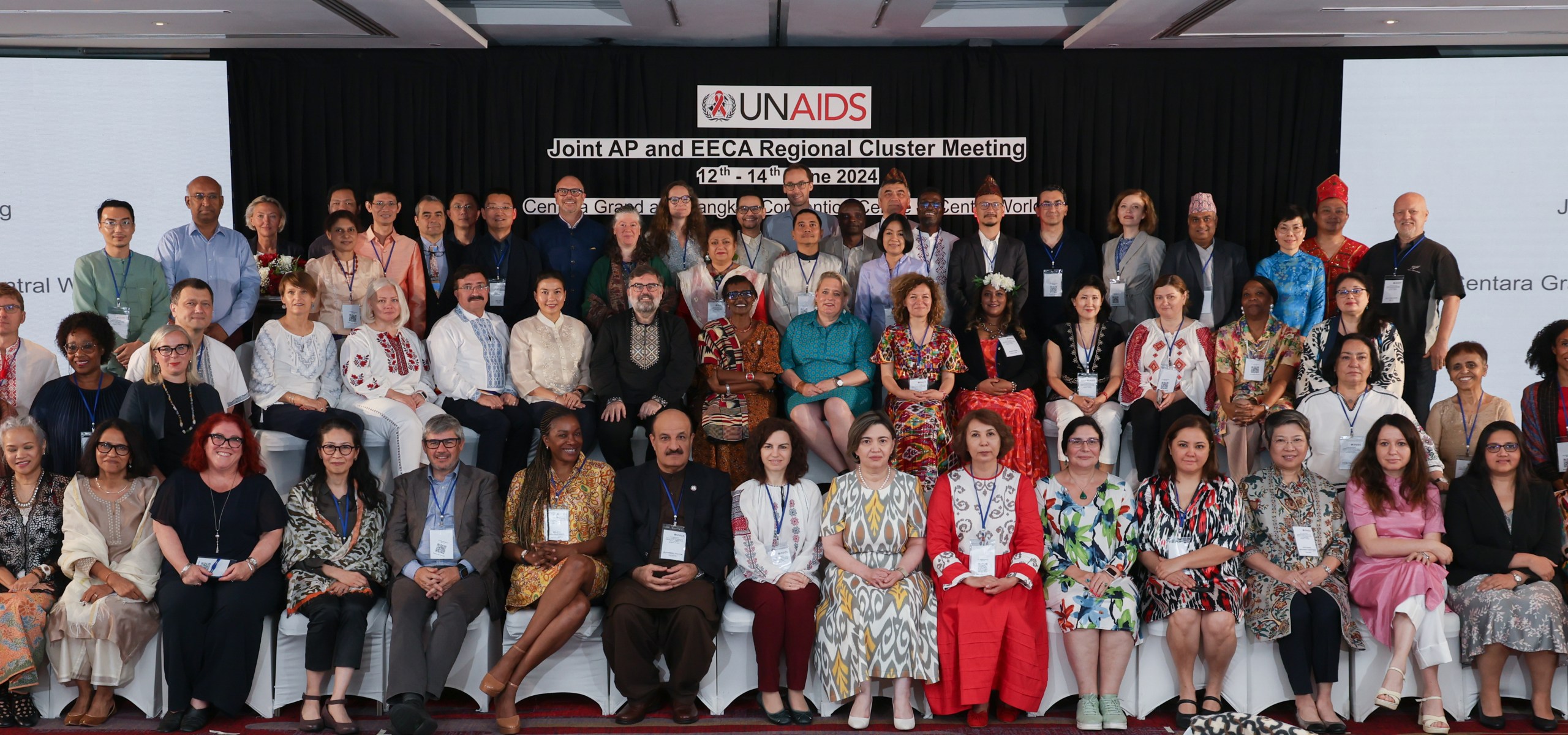
For the first time, UNAIDS staff from Asia Pacific (AP) and Eastern Europe Central Asia (EECA) came together for a joint Regional Cluster Meeting (RCM), held from June 12 – 14 in Bangkok, Thailand.
Read More
GENEVA/BANGKOK, 16 May 2024—On the International Day to End Homophobia, Biphobia, and Transphobia, IDAHOBIT (commemorated worldwide on 17 May) and ahead of Pride Month in June, UNAIDS is calling on governments everywhere to protect the human rights of lesbian, gay, bisexual, transgender and queer (LGBTQ+) people. Assuring the rights of every person is essential for public health because it enables equitable access to health services.
Read More
The UNAIDS India team and our cosponsor, UNDP India, were honoured at the 3rd National Transgender Awards, for our steadfast commitment to championing the rights of the transgender community, working towards their access to healthcare and advocating for their empowerment.
Read More
Strategic, rapid expansion of non-discriminatory prevention, testing and treatment services required
SUVA/BANGKOK, 12 March 2024—Available data suggest that the HIV epidemic in Fiji has been growing in recent years. As the country accelerates action to address the situation, the strategy should be evidence-driven, multisectoral and grounded in HIV response best practices. With political will and community leadership, Fiji can ensure that all people in need can safely access services to help them prevent HIV, learn their status and get life-saving treatment.
Read More
Women’s rights, and their health, are entwined.
Read More
One-third of people living with HIV in Asia and the Pacific are women. But their issues are often hidden.
Gender-based violence. Restricted economic opportunities. Child marriage. Underage pregnancy. Denial of property rights.
Read More
Ibu Mawar (not her real name) learned she was living with HIV after receiving a test during an antenatal care visit.
“I was surprised, of course, when they told me. But I didn’t really doubt or deny the result,” she remembered from the Sorong City Health Office in West Papua. She immediately started treatment to prevent transmission to her son. “Even though I’m positive,” she said, “our child is not.”
Read More



 UNAIDS Asia-Pacific